
Drones / Operational perspective
A better view should change a decision.
The flight is the interesting part to watch. The decision it improves is the part that matters.
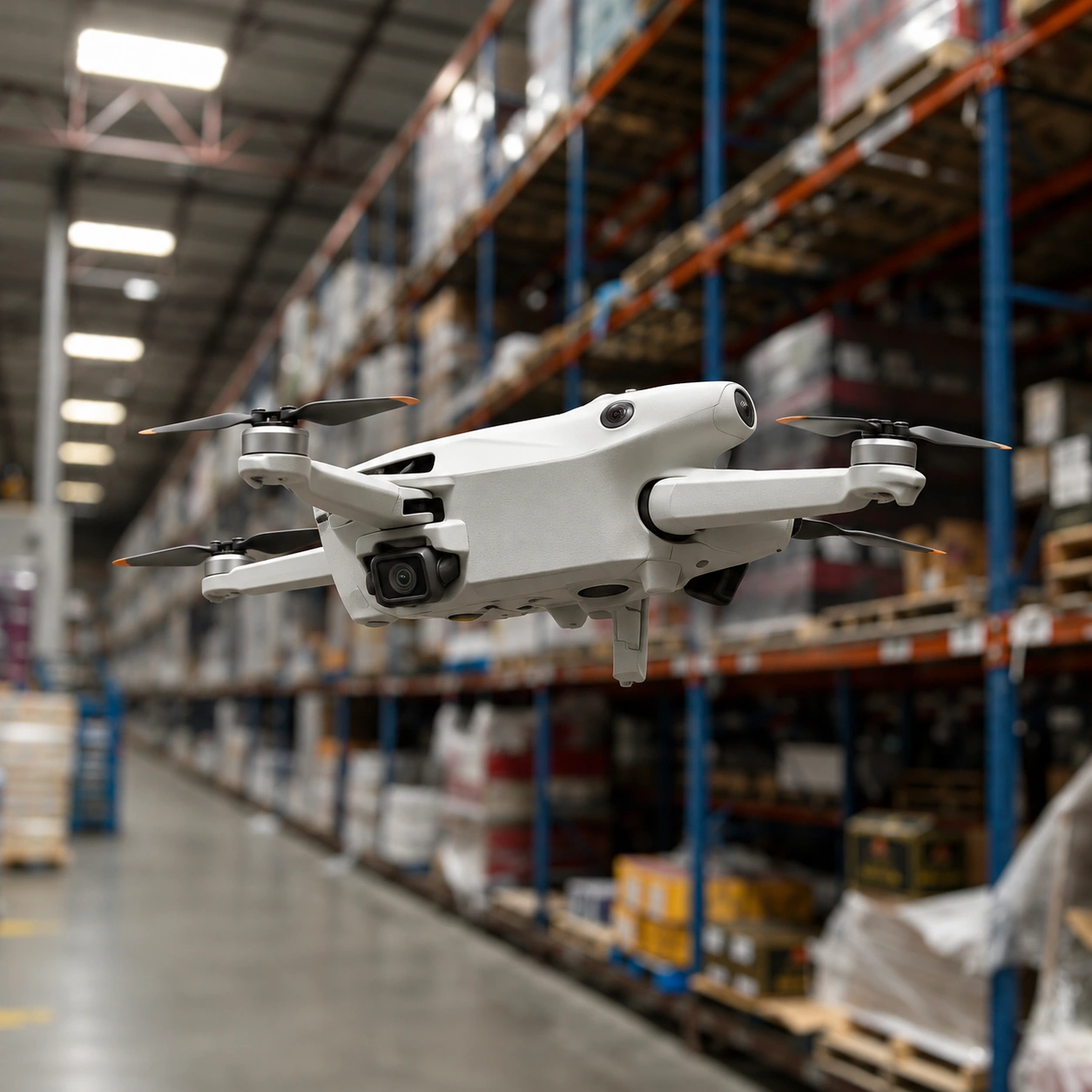
The view is an input
A warehouse can make a business tangible. You can see the scale, the structure, the equipment and the distance between things. My drone photography is part of my interest in those systems. A different angle gives me a reason to look again at what may have become familiar from the ground.
That does not mean an aerial image explains the operation. A photograph is a record of what was visible from one position at one moment. It cannot tell me, on its own, why a team staged material in a particular place or whether a route is working well. The people doing the work hold context the camera does not.
My standard for a useful view is therefore practical: what question does it help someone ask, and what decision could the answer change? A beautiful image can communicate scale. An operational image also needs a purpose.
Start with the question on the ground
Before collecting more imagery, I would write the question in plain language. For example: where does a handoff become difficult to see? What needs to be understood about the relationship between storage, movement and access? Those are different questions, and they may require different evidence.
Imagine a team trying to understand repeated walking between two work areas. A wide view might help explain their relative positions. It would not establish the number of trips, the time they take, or whether that movement is avoidable. Those details would need observation, records and a conversation with the team.
This distinction prevents a compelling picture from becoming an unsupported diagnosis. First make the layout visible. Then check what actually happens there. Only then propose a change. This is an illustrative approach, not a claim that a particular flight produced a measured productivity gain.
Separate what you see from what you infer
I find it useful to keep three lines beside an image: observation, interpretation and next check. “Material is staged beside this aisle” is an observation. “This staging may create an extra handling step” is an interpretation. “Ask the shift lead why it is staged here and observe the next move” is a next check.
The same discipline matters when AI enters the picture. A generated description could help organize observations or suggest questions. It should not quietly turn a possibility into a fact. The useful output would preserve the link to the source image, distinguish uncertainty, and make correction easy for a person who knows the space.
I am interested in that connection between visual evidence and useful analysis. I am describing a direction to explore here, not a deployed autonomous inspection system. A concept illustration or an enhanced photograph is also different from an unaltered record; I would use the original capture for any decision that depends on what was actually present.
Close the loop with the people doing the work
An image becomes more useful when people can point to it together. The operator may explain a constraint that is invisible in the frame. A manager may connect the same location to a recurring scheduling issue. Someone maintaining the equipment may identify a reason a seemingly simpler layout would not work.
The output of that conversation should be small enough to act on: a question resolved, a proposed change, a person responsible for checking it, and a way to compare before and after. If the team cannot say what it will do differently, more footage may add volume without adding understanding.
This is where drones and leadership meet for me. Both can change the vantage point. Neither removes the responsibility to listen. Perspective earns its value when it helps people make a better decision and follow through on it.
Choose the decision first. Gather the view that helps. Validate it with the people closest to the work.
A perspective on practice. Examples describe observed work or proposed approaches; no measured business improvement is claimed.