
Awareness / Connection
Awareness beyond the mat.
The value of paying attention becomes clearer in what I do after I notice.
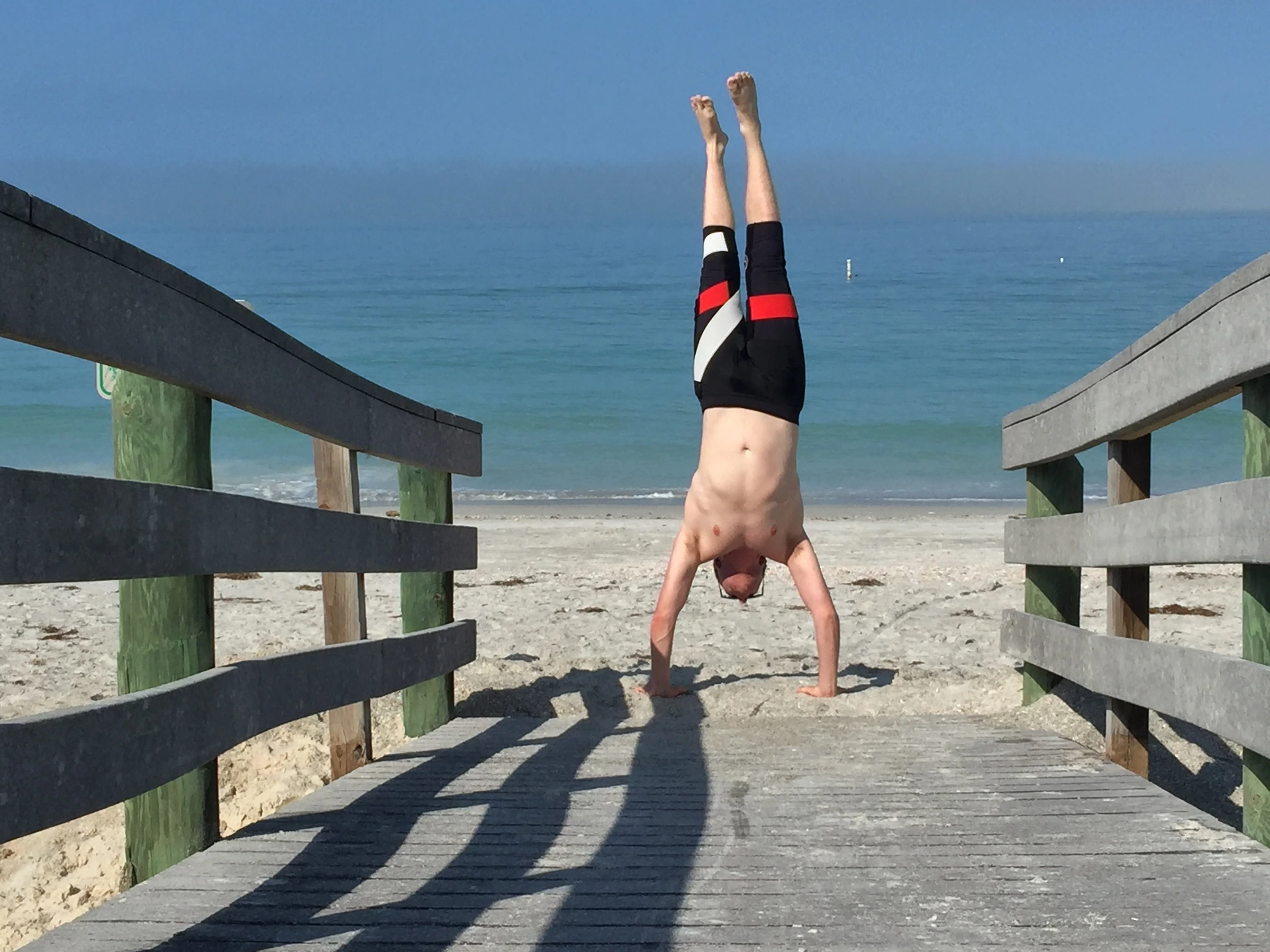
A different view is a beginning
In this photograph near Clearwater Beach, I am holding a handstand between the wooden railings leading to the sand. The water stretches behind me. It is an obvious change of perspective, and an invitation to think about the less visible ways I can change how I see.
Turning upside down does not automatically make me more aware. The useful question is what I notice when I return to an ordinary stance: the pace I am bringing, the outcome I want and the assumptions I have made before someone else has finished speaking.
I cannot recover every thought I had when that photograph was taken. What I can do is use the image as a reminder now. A change in viewpoint gives me an opening. Paying attention to what it reveals is the practice.
Notice without rushing to explain
Awareness can begin with something small and specific. I am in a hurry. I am preparing a response. I am becoming impatient with a question. Those observations are more useful than immediately assigning a story about who is right or why the other person is being difficult.
There is a gap between noticing my reaction and deciding what it means. I want to preserve that gap long enough to remain curious. The first explanation available to me may be incomplete, especially when I am tired, invested in an outcome or carrying something from earlier in the day.
That does not mean ignoring what I feel. It means letting the observation be information before making it a conclusion. The quality of my next action depends partly on whether I can tell those two things apart.
Make room for another person’s account
My interest in yoga and bodywork connects with a broader interest in listening. There is always more to a person than what I can immediately see. My own experience with pain has given that idea a very practical meaning.
Still, knowing that people carry unseen experiences does not tell me what a particular person is carrying. Awareness should make me more willing to ask, rather than more confident that I can read someone correctly. A quiet response, a tense expression or a change of pace can have many explanations.
In conversation, I want to offer attention without taking ownership of the other person’s story. That might mean asking what I missed, repeating what I think I heard or allowing a pause to remain a pause. Listening becomes useful when the other person has room to correct my understanding.
Let attention become a choice
Self-awareness can stay abstract if it never affects what happens next. I can recognize that I am distracted and continue dividing my attention. I can notice an assumption and keep speaking as though it were established. The recognition matters, but it is only the beginning.
The next choice can be modest: put the screen down, ask a clearer question, acknowledge uncertainty or give someone the time I said I would give them. In leadership, it may mean checking an interpretation with the people doing the work before acting on it.
This is the connection I want between practice and the rest of my life. The attention developed in a quiet moment should have somewhere to go. I want it to show up in the care I bring to a conversation, the patience I bring to a problem and my willingness to see more than my first impression.
Notice your reaction. Leave room for another account. Make the next choice with more awareness than the last.
A personal reflection on movement, attention and how we relate to one another.